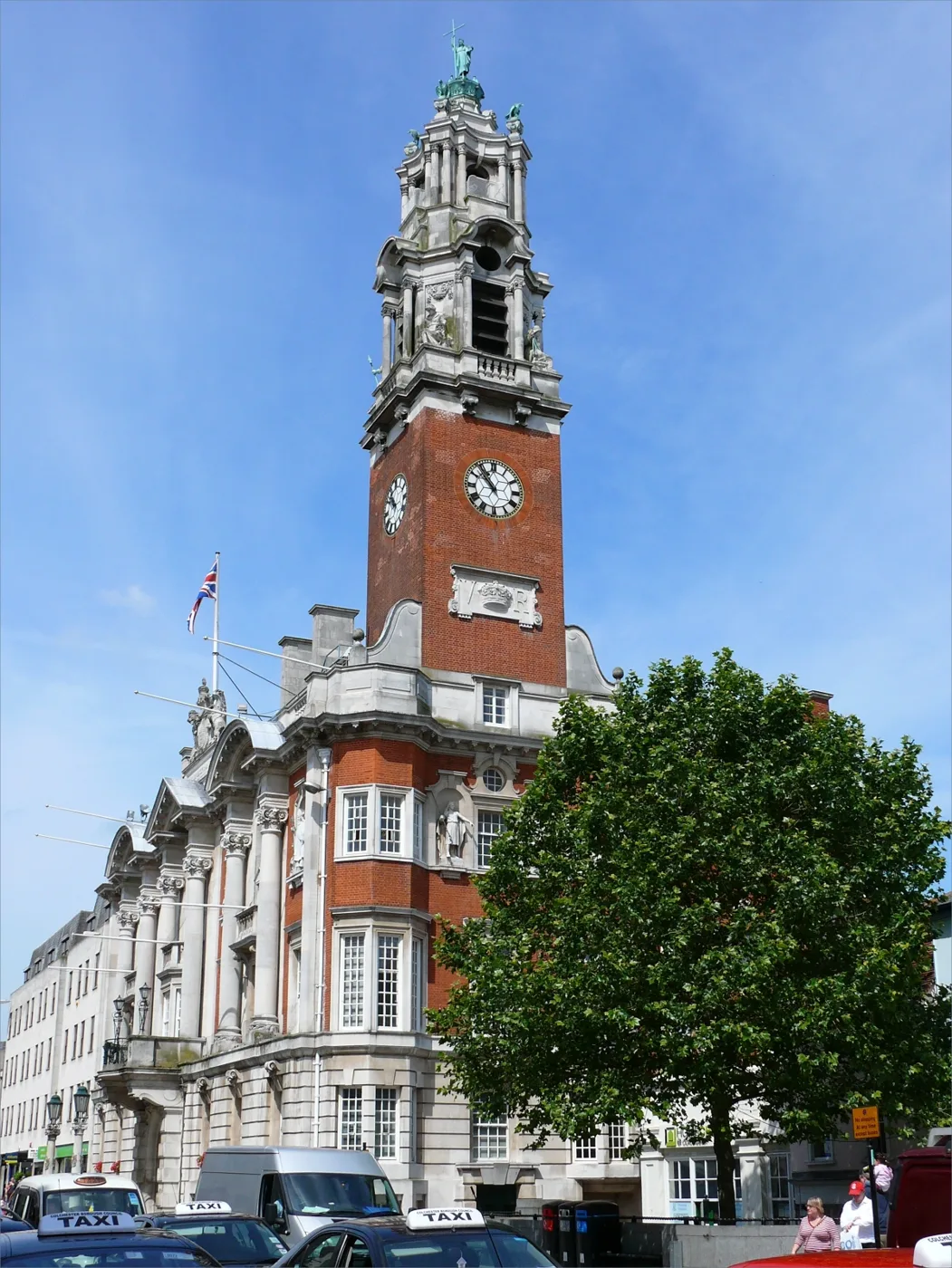

Colchester City Council stays until at least April 2029, the minister has confirmed. On Tuesday councillors see how city status and the Mayor would survive.
Colchester City Council will run the city until at least 1 April 2029. The minister for local government has confirmed that no new council can take over in Essex before then. Meanwhile, the council’s own officers have set out how Colchester would keep its city status, its Mayor and its 800-year-old civic traditions if the council is eventually abolished.
The new timetable
Jim McMahon MP, the Minister for Local Government, wrote to council leaders in 15 areas on 29 October. Essex, Southend-on-Sea and Thurrock is one of them. His letter, published on GOV.UK, says:
- No new decision has been taken for Essex. All the proposals submitted for the county, for three, four or five new councils, are still under consideration.
- Some areas will hear “by Christmas”, and every area will have an outcome “by early next year”. The letter does not say which areas come first.
- The May 2027 elections go ahead to the existing councils, including Colchester City Council.
- Elections to any new councils would be in May 2028, with the new councils taking over on 1 April 2029.
That is a year later than the plan the government withdrew on 7 September. Under that plan, Colchester, Braintree and Tendring would have merged into a North East Essex Council on 1 April 2028.
The letter also deals with money. Areas where new councils had been announced will get half of the £900,000 transition support per planned council, “based on the number of new unitaries in the initial announcement”. Greater Essex was told in March to expect five, which works out at £2.25 million for the area. The letter does not say how that is shared between councils. In October Colchester’s leader asked Full Council to demand the government repay what the city had spent on the abandoned plan.
What the council is preparing for
On Tuesday 3 November the council’s LGR Transformation and Transition Panel will consider a report on preserving Colchester’s city status (item 7). It was written by the council’s monitoring officer before the minister’s letter arrived.
Its starting point is blunt. Every proposal still on the table for Greater Essex would abolish Colchester City Council and its area. If nothing is done, the report says, “Colchester would lose its city status, mayoralty and civic traditions”. It names Rochester as a place where that happened after an earlier reorganisation.
The report recommends asking the government to set up Charter Trustees for Colchester if reorganisation goes ahead. These are a small ceremonial body already used in Bath, Carlisle, Chester, Durham and the former borough of Harrogate. In Colchester they would:
- hold the city status granted by Queen Elizabeth II on 6 September 2022
- elect a Mayor and Deputy Mayor each year, continuing an office the report traces to a charter of 9 July 1635
- keep the civic regalia, charters, plate and the coat of arms
- keep the honorary office of High Steward
- be able to grant the honorary freedom of the city
They would run no services. They could not admit freeburgesses: that power, along with the market rights and the Colne Fishery, would pass to the new council.
Who the trustees would be
Charter Trustees can only be set up for the parts of an area that have no parish council. In Colchester that is mostly the urban area. The 29 town, parish and community councils broadly cover the rural parts.
The trustees would be the new council’s councillors for the unparished and partly parished wards. The report counts them under each proposal:
| Proposal | Councillors for the Colchester area | Who would be trustees |
|---|---|---|
| Five new councils (North East Essex) | 37 | 26 |
| Three or four new councils (North Essex) | 27 | all 27 |
Even though only the urban wards choose the trustees, the report says they would hold city status for the whole of the present Colchester area, villages included.
A parish council for the city centre would not work instead, the report says. City status can only pass to a body whose boundary matches the area named in the 2022 Letters Patent exactly, and no parish would.
What it would cost
Charter Trustees can charge their own small council tax precept, paid only by homes in their area. The report gives examples of current precepts elsewhere of £2 to £8 a year for a Band D home in 2026/27. In its first year the new council would have to fund them.
The report does not put a figure on Colchester’s precept. You can see what the city’s share of your bill is now on our Colchester council tax bands page.
What the government says
The minister’s written statement to Parliament on 29 October said the government would “work with places to protect their city status”. It said that could mean “bringing new legislation to this House where it is necessary to do so”.
Councillor David King, the council’s portfolio holder for local government reorganisation, said in the council’s release on 30 October: “There is an established and proven process which can preserve the things that matter most to our communities.”
What it means for you
- Nothing changes to your services or your council before April 2029. Bins, council tax, planning and housing stay with Colchester City Council and Essex County Council.
- The May 2027 city council election goes ahead, with a third of the 51 seats up, as planned.
- Tuesday’s meeting is open to the public. It starts at 6pm in the Grand Jury Room at the Town Hall, and the agenda includes a “Have Your Say” slot, in person or remotely. The panel is only asked to note the report. Any formal request to the government would need a Full Council motion once the future of Essex is clearer.
- If you live in a parished village, such as Tiptree, Stanway or West Mersea, you would still live in the city, but your new councillors would not be among the trustees under the five-council option.
Sources: Minister for Local Government’s letter of 29 October 2026 and written statement HCWS432; Colchester City Council LGR Transformation and Transition Panel, 3 November 2026, item 7; Colchester City Council release, 30 October 2026.
Have your say