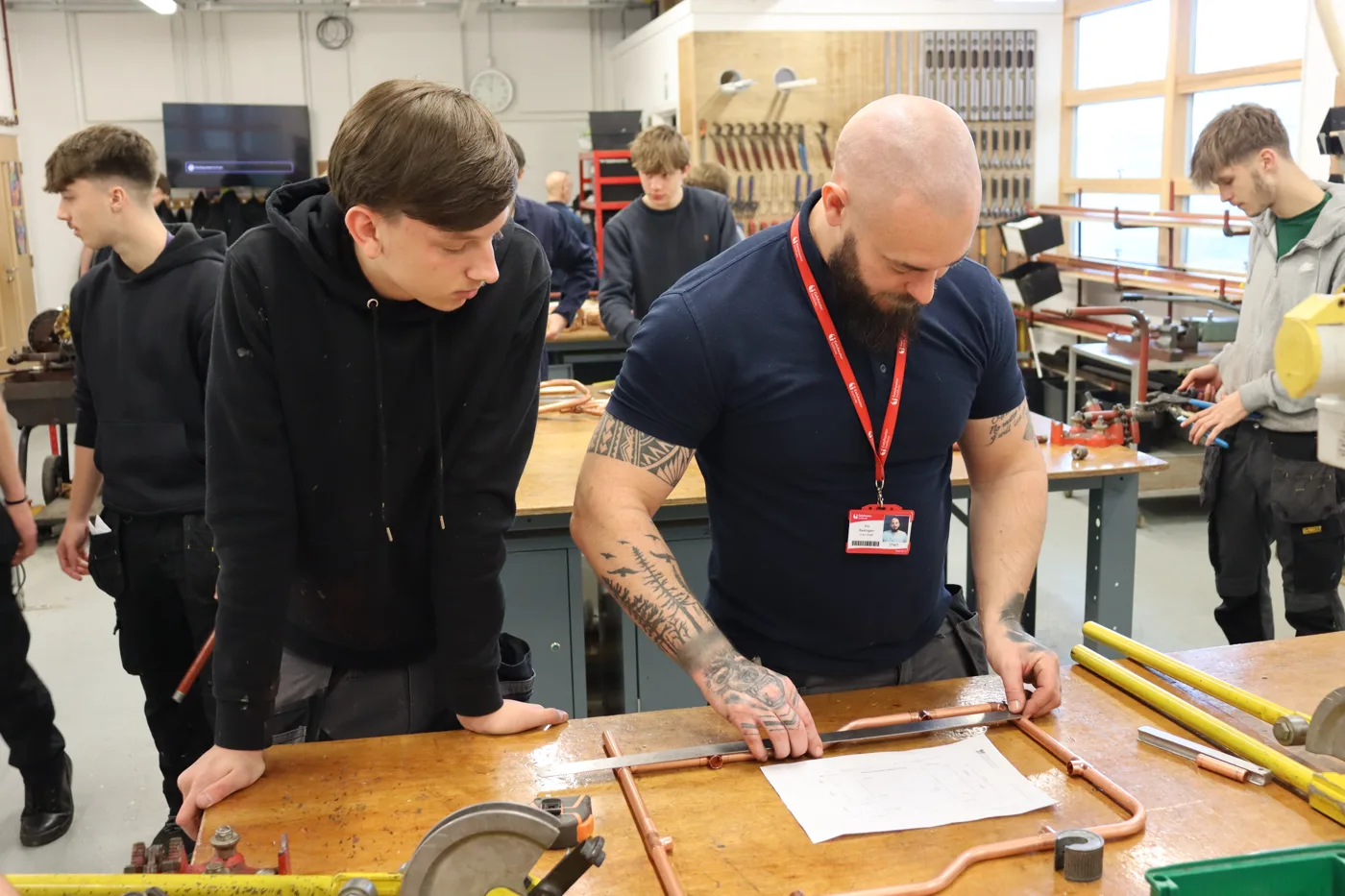

Phil Rawlingson from Frinton trained as a plumbing apprentice at Colchester Institute, spent seven years in the trade and now teaches in the same workshops.
Phil Rawlingson learned plumbing as an apprentice at Colchester Institute. After seven years in the trade, working for himself as a plumber and gas engineer, he is back in the same workshops as a plumbing trainer, teaching the next intake.
Phil, who lives in Frinton-on-Sea, says he never expected to end up there. “If you’d asked me then where my career was heading, I would have said I’d be staying on the tools,” he says.
His story was put forward for Tomorrow’s Engineers Week, which runs from 9 to 13 November.
“I wanted to pass on the knowledge”
“Becoming an FE trainer wasn’t something I’d originally planned, but I wanted to pass on the knowledge, support and encouragement that helped me build my own career,” Phil says.
He took the job because of the trainers who taught him, and he now teaches aspiring plumbers the practical skills and the confidence they need to start work in the trade.
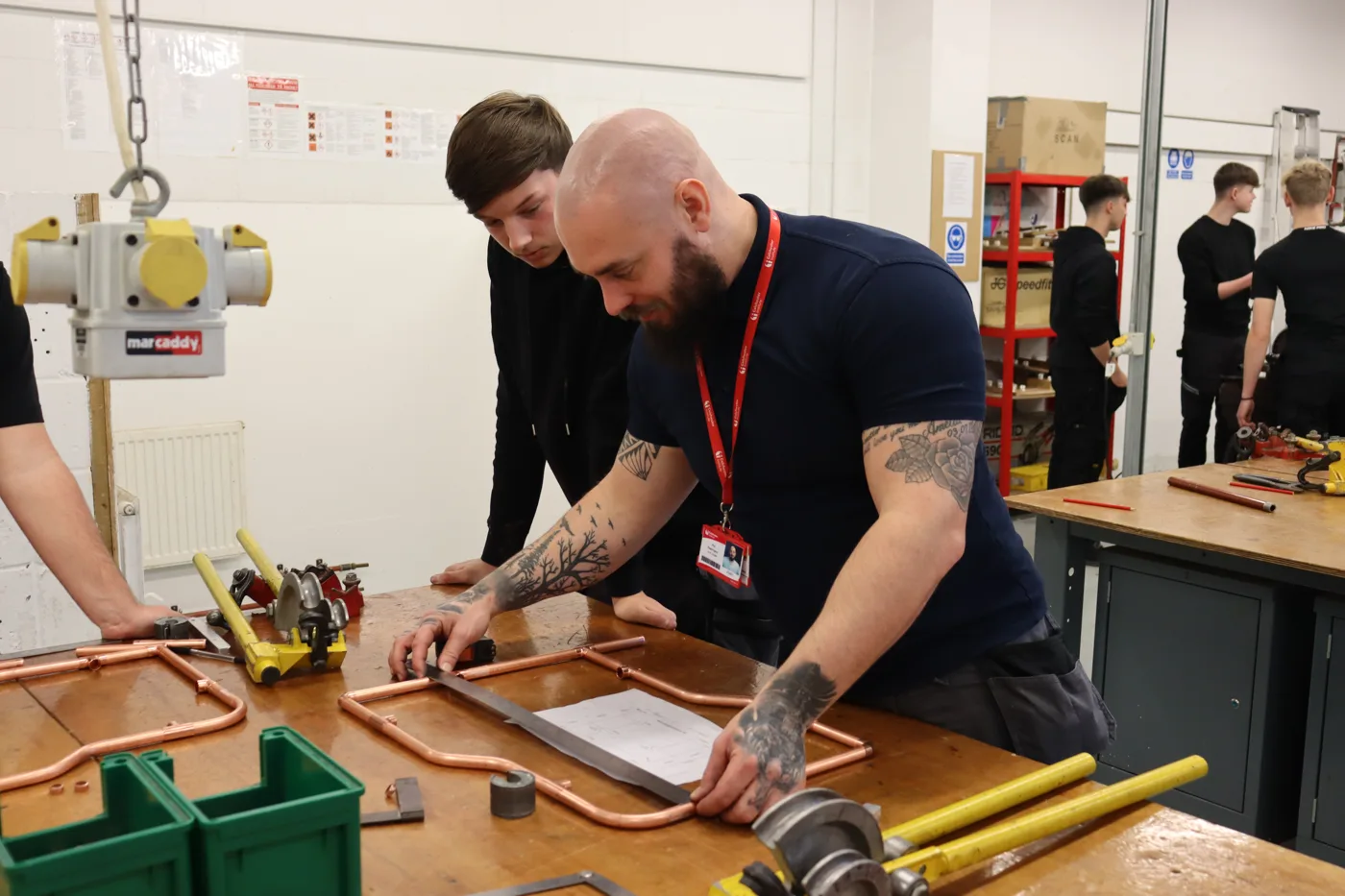
“Training others has been one of the most rewarding decisions I’ve made,” he says. “My industry experience allows me to bring real-world examples into the workshop and help learners understand not just how to do something, but why it matters in the workplace. There’s nothing better than seeing someone grow in confidence and develop the skills they need for a successful career in the trade.”
Demand for skilled workers in the East
The construction and maintenance of heavy industry in the region is expected to need more people. The Engineering Construction Industry Training Board forecasts that the engineering construction workforce in the East of England could grow by 950 people, or 12%, by 2030, with project managers, project engineers and scaffolders among the roles most in demand, according to a July 2025 summary by the East of England Energy Group. Across Britain the board expects that workforce to pass 135,000, a rise of 19%.
“You don’t have to leave behind everything you’ve built”
Phil says people already working in a trade may be closer to teaching it than they think.
“If you have real-world industry experience and a passion for your profession, you may already have what it takes to become an FE trainer,” he says. “For me, training others has given my skills a new purpose, allowing me to stay connected to the industry while helping shape the next generation of skilled workers.
“I’d encourage anyone who enjoys sharing their knowledge to consider it. You don’t have to leave behind everything you’ve built in your career to make a real difference.”
The Department for Education’s Teach in Further Education site explains how people from industry can move into training at a college.
Have your say