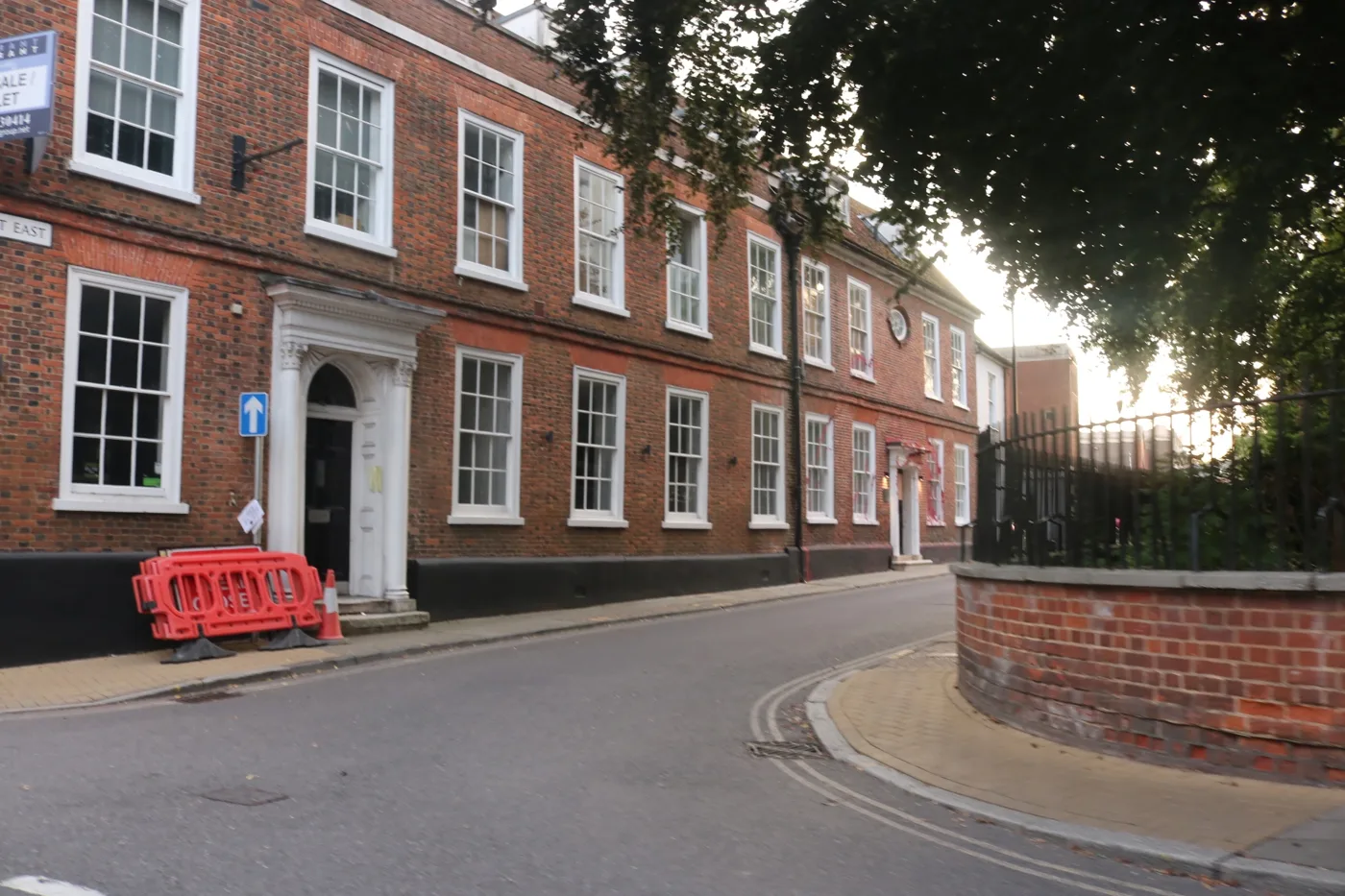

Cabinet threw out the motion to auction long-empty city centre units on 2 September, saying vacancy rates are too low to qualify. The minutes are now published.
Colchester City Council’s Cabinet has rejected the plan to start auctioning leases on the city’s long-empty shops. The minute is one line: “RESOLVED that the motion not be adopted.”
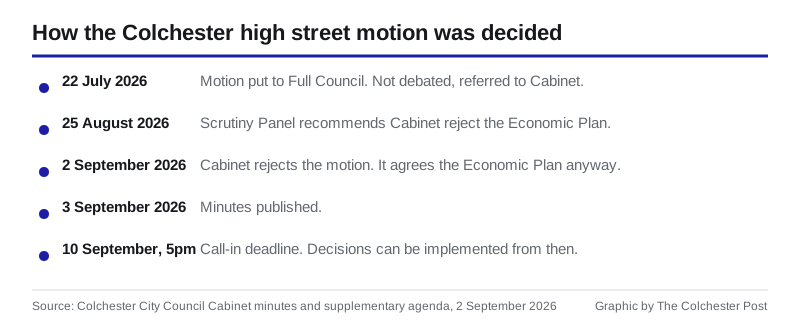
The decision was taken on Wednesday 2 September and the minutes were published the next day. (Cabinet minutes, 2 September 2026) The council’s own news release that day announced a package of city centre cleaning equipment and made no mention of the motion at all.
We reported the motion before the meeting. It was proposed by Councillor Lee Scordis, leader of the council’s Labour group, put to Full Council on 22 July, and sent to Cabinet without debate because it concerned an executive function.
Why the Cabinet said no
The motion’s central ask was that Colchester use the government’s High Street Rental Auction programme, which lets councils auction off leases on units left empty for more than a year.
Councillor Paul Dundas, Leader of the Council, told the meeting the programme did not fit Colchester. The minutes record four reasons:
- vacancy rates were not at the level needed for the programme
- it would be difficult to administer
- it would not be suitable for the large units in Colchester
- it could deter investment
Councillor Andrea Luxford Vaughan, Portfolio Holder for Planning and Sustainable Development, added that the Business Improvement District itself had concerns about the auction programme, and that it was not expected to have a significant impact in Colchester.
Councillor Alison Jay, Portfolio Holder for Economic Growth, Transformation and Digital, challenged the premise that little had happened since city status was granted in 2022. She told Cabinet that more than £300 million of investment had been secured by the council and its partners, and that unit vacancy levels in the city centre were at or below the national average. A refreshed high street strategy plus a separate city status delivery plan, she said, risked duplication and would divert resources from projects already running.
Councillor Dundas, who submitted the city status bid himself, said it had been understood at the time that the benefits would be “somewhat intangible”.
“A doughnut city”
The bluntest line came from the Cabinet’s own side. Councillor William Sunnucks, Portfolio Holder for Resources and Assets, said Colchester was at risk of becoming a “doughnut” city, with a declining centre and a thriving edge, and that the centre would have to change fundamentally by offering a different range of services.
Councillor David King, Portfolio Holder for Local Government Reorganisation, Communities and Public Protection, put the same geography more positively. He said Colchester effectively had three centres, the historic centre, Stane Park and Northern Gateway, each offering different things.
On the anti-social behaviour the motion raised, Councillor King said the Public Space Protection Order was being robustly enforced on a zero-tolerance basis, and that a revised PSPO is currently out for consultation.
Councillor Martin Goss, Portfolio Holder for Waste, Neighbourhoods and Leisure, said the council could not control the spread of vape shops and nail bars under current planning law. Councillor Luxford Vaughan made the same point about the retail mix, noting that the government has indicated it may bring in some controls on candy and betting shops. She said shop frontages are covered by a supplementary planning document that puts the emphasis on preserving historic character, and that the council adopted a City Centre Masterplan as a supplementary planning document in 2024.
Councillor Mark Goacher, leader of the Green group, and Councillors Tim Young and Julie Young all spoke in support of the motion.
What the council announced instead
On the same day, the council published a release headed “Cabinet approves investment package to enhance Colchester city centre”. It lists:
- a new pavement sweeper
- two pavement scrubbers
- additional frontline operatives
- increased licensing capacity to use new regulatory powers
- body-worn cameras for city centre wardens
The release gives no cost for any of it. The published minutes of the 2 September meeting record no separate decision on the package. The only reference to it in the minutes is Councillor Goss telling the debate that new equipment “would shortly be made available”.
The Economic Plan was approved over Scrutiny’s objection
The high street motion was not the only city centre item at that meeting.
Cabinet also agreed the new Colchester Economic Plan 2026-28 and recommended it to Full Council, eight days after the Scrutiny Panel had formally recommended that Cabinet reject it. (Supplementary agenda, draft minute 581)
The panel met on 25 August and raised several problems with the draft:
- artificial intelligence and automation appear in a single line, “skills planning to address AI displacement”, which panel members said understated the effect on junior jobs
- two council documents gave different figures for local wages. The draft plan said Colchester saw a 30% increase in gross weekly pay between 2021 and 2024. The homelessness report at the same meeting said wages had stagnated, growing between 0% and 3%
- there was no benchmarking against other areas
The Service Director for Economic Growth and Transformation said he would check the wage figures. At Cabinet, Councillor Jay said data accuracy was being checked and that benchmarking mattered less in a strategy document than in later reporting.
The reason the plan is a refresh rather than a rewrite is the clock. Local government reorganisation was going to abolish Colchester City Council, and officers told both meetings that the short time left meant the 2022 strategy should be updated rather than replaced. (Updated 14 September 2026: the government withdrew that decision on 7 September, five days after this Cabinet meeting. This sentence previously said reorganisation “will abolish” the council.) Cabinet members said the priority was delivering existing projects rather than adding ones that could not be finished.
What it means for you
The rental auction idea is dead for this council. If you run a business next to a unit that has been shut for years, nothing in the 2 September decisions changes that, and the council’s stated position is that Colchester’s vacancy rate is not high enough to qualify for the scheme anyway.
The window to challenge the decisions has now closed. The minutes state that they could be implemented from 5pm on 10 September unless called in, and that a call-in had to reach the proper officer by the same deadline, signed by one councillor with four others countersigning.
Two things are still open to residents. The revised Public Space Protection Order is out for consultation, and the Economic Plan still has to go to Full Council before it is adopted as part of the council’s policy framework.
For planning decisions on individual city centre units, including shopfronts, see our Colchester planning news page.
Sources
- Colchester City Council, Cabinet minutes, 2 September 2026, minutes 1065 and 1066, published 3 September 2026
- Colchester City Council, Cabinet supplementary agenda for 2 September 2026, extracts from the draft Scrutiny Panel minutes of 25 August 2026
- Colchester City Council, Cabinet approves investment package to enhance Colchester city centre, 2 September 2026
- Colchester City Council, councillors and political make-up
Have your say