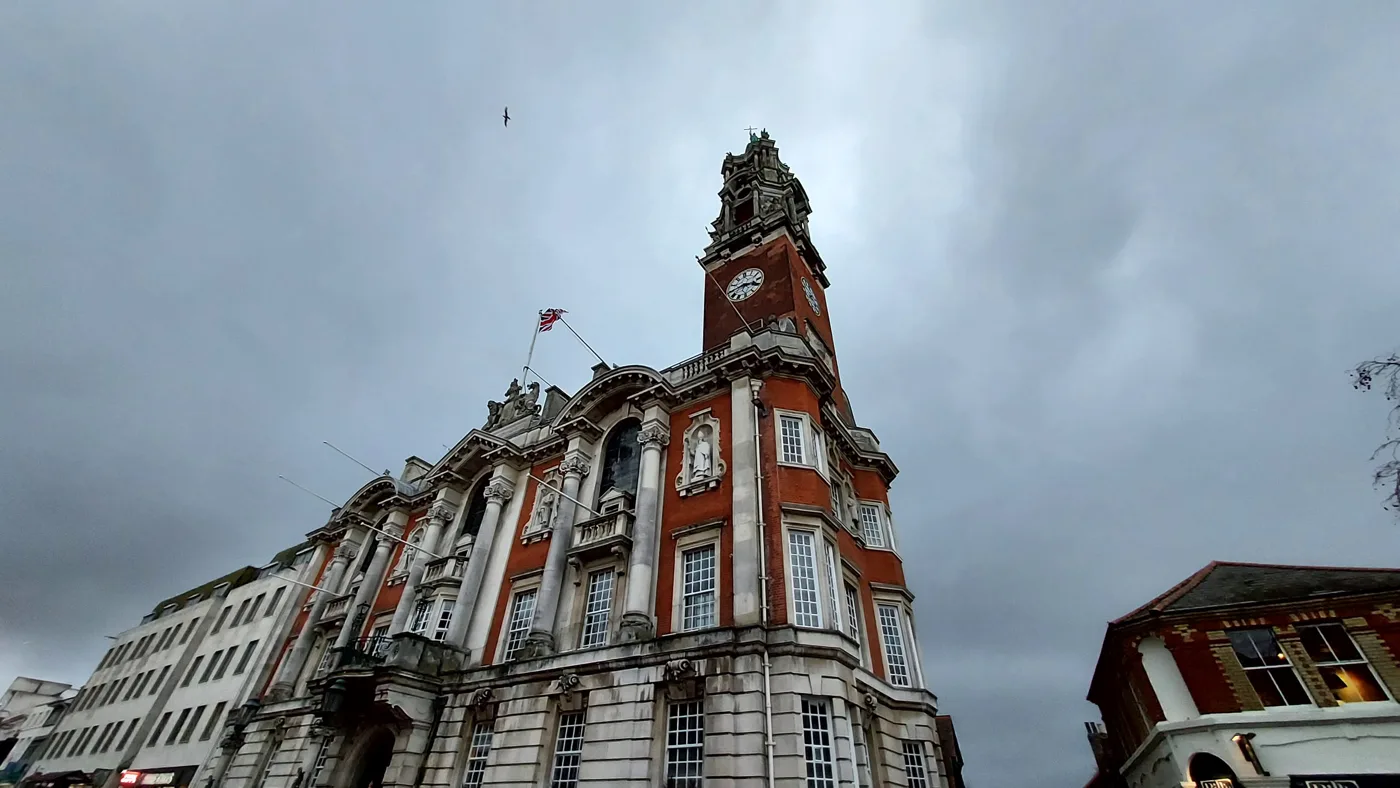

Ward councillors can no longer send a planning application to committee from 1 November. Officers decide most cases; the committee chair and a senior planner must agree any referral.
Colchester’s ward councillors lose the power to send a planning application to the Planning Committee this weekend. From 1 November, most applications in the city will be decided by council officers. Only the committee chair and a senior planner, acting together, can put one in front of councillors.
The change is national, not a local choice. New government regulations take effect on Saturday 31 October, and every council in England has to rewrite its rules to match. Colchester’s Planning Committee approved its new scheme on 1 October. Its members voted unanimously at the same meeting to put on record their concerns about the loss of democratic oversight.
What changes
Until now, any Colchester ward councillor could ask in writing, within 25 days of being notified of an application, for it to go to the committee. That rule is in the council’s current scheme of delegation. The government’s statutory guidance says that kind of call-in, and any trigger based on the number of objections, “will not be possible” under the new national scheme.
| Route | Until 31 October | From 1 November |
|---|---|---|
| Ward councillor asks | Goes to committee if requested in writing within 25 days | Not enough on its own; a request needs planning reasons |
| Householder, minor commercial, one to nine homes | Could be called in | Officers must decide, unless a councillor, officer or the council has an interest |
| Larger schemes | Could be called in | Officers decide unless the chair and a senior planner both agree to refer it |
| Listed building, advert and protected tree consents | Could be called in | Delegated to officers in Colchester's new scheme |
| Council, councillor or staff applications | Always went to committee | Go to committee only if the chair and a senior planner agree |
How a case can still reach committee
The report to the 1 October meeting sets out a new referral protocol. Planners keep a triage log of larger applications that might qualify. Those cases go to a regular referral review meeting.
Two people decide. One is the “nominated officer”, a senior planner such as the Service Director for Planning or the Development Manager. The other is the “nominated member”, the committee chair, or the deputy chair in their absence. Both must agree, and the application must meet at least one of two tests:
- it raises an economic, social or environmental issue of significance to the local area
- it raises a significant planning matter, judged against the Local Plan, national policy and other planning considerations
If the two disagree, officers decide. If no decision has been made by the application’s deadline, officers decide.
The protocol lists what does not, on its own, justify a referral:
- the number of representations received
- the level of public support or objection
- a petition
- a ward councillor’s request without planning reasons
- the fact that an application is contentious or unpopular
- social media interest or press coverage
The council will keep a referral register of every case considered, with the reasons. It will be reported to the Planning Committee every quarter and published on the council’s website.
Cases that went to committee this year by call-in
Recent agendas show how councillors used the power. Each of these reached committee because a ward councillor called it in:
- a change of use to a children’s home in Van Dyck Road, Prettygate, called in over residents’ fears of noise and disturbance (on the 28 May agenda)
- a pre-school nursery at 1A Crowhurst Road, called in over parking and the single-lane street
- the removal of the fountain in Culver Square, called in over the loss of the Sea Holly sculpture and seating (30 July)
- five bungalows west of Carshalton End, called in as “overdevelopment” (1 October)
Five homes is “minor residential development” in the new rules if the site is under half a hectare. Applications of that size must be decided by officers from 1 November.
What councillors said
The minutes of the 1 October meeting record that the Development Manager told members the changes were “mandatory and not optional”. Missing the 31 October deadline would expose the council to legal challenge, and decisions could be quashed.
Members worried that fewer applications would reach committee, giving councillors fewer chances to speak for their communities. They asked for:
- informal consultation with the chair, deputy chair and committee members on cases
- training for all councillors, including those not on the committee
- clear records of referral discussions that the public can follow
- more ward councillor involvement before applications are submitted
They then voted unanimously to formally record their concerns about the national scheme. The government must review the regulations and report by 31 October 2028.
What it means for you
You can still comment on any application. Officers must weigh every representation, whoever decides the case. What changes is that a lot of objections, or a petition, will no longer send a scheme to a public committee meeting by themselves.
If you want a councillor to push for a committee hearing, give them planning reasons. Think about the Local Plan policy, traffic, heritage, design or environmental harm, not simply that people are against it. The chair and the nominated officer will then decide together.
Fewer cases at committee also means fewer chances to speak at a public meeting. The council’s Have Your Say public speaking scheme still applies to applications that do go to committee. The first meeting under the new rules is on Thursday 5 November. Updated 5 November: its agenda has three applications, covering two schemes: the Holy Trinity churchyard and the High Woods visitor centre. All three are there because the council itself is the applicant. None came by the new nominated officer and chair route. We track what is coming up on our Colchester planning news page.
Have your say